How to Fight Better: Why “Apology Languages” are the Key to Couples Counselling in Vancouver
At this point, you’ve probably heard of the Five Love Languages. Maybe you’ve even taken the quiz, identified that you’re a “Quality Time” person, and shared the results with your partner. Talking about love languages has become a common bridge in dating and friendships, and a way to say, “This is how I feel loved and cherished.”
But have you heard of Apology Languages?
At Haven Wellness Collective, we see couples every day who are deeply in love but feel like they are speaking two different dialects during a fight. Just as we receive love in ways that are unique to us, we also need repair and apologies to land in a specific way for them to really “hit.”
Think of it like this: if your love language is Quality Time and your girlfriend brings a surprise coffee to your office, will you enjoy it? Of course! It’s a kind gesture. But if she continues to show love primarily through gifts, dropping off coffee on your lunch break, but then heading out quickly, while all you’re craving is one hour of uninterrupted, intentional connection, you might start feeling distant. You might even start to feel less loved, despite her best efforts.
The same logic applies to apologies. If you need to hear “I was wrong” to feel safe again, but your partner keeps offering to “make it up to you” with a nice dinner without ever admitting fault, the wound stays open. If you haven’t taken the quiz yet, feel free to do so before finishing our blog!

That “Lightbulb” Moment: When an Apology Finally Clicks
Learning about apology languages was a massive “lightbulb” moment for me both personally and professionally. As I learned what my apology language was, I finally understood why I was able to move forward in some relationships after a conflict, while in others, the apology simply fell flat.
If you’ve ever walked away from an “I’m sorry” still feeling on edge, untrusting, or like the issue wasn’t actually resolved, it isn’t because you’re “holding a grudge.” It’s likely because your nervous system didn’t receive the specific type of repair it needs to feel secure. When the apology doesn’t match your language, it feels clinical or dismissive.
The Science of the “Repair Attempt”
When we look at the science of couples counselling, we often turn to the research of Drs. John and Julie Gottman. After decades of studying couples in their “Love Lab,” they discovered that the secret to a lasting relationship isn’t avoiding fights—it’s the Repair Attempt.
A repair attempt is any statement or action—silly or serious—intended to diffuse negativity. According to Gottman, the success of these attempts is the primary difference between “Masters” and “Disasters” of relationships. Understanding your partner’s apology language is like knowing the exact frequency to broadcast your repair attempt so they can actually hear it and begin to de-escalate.

What are the 5 Apology Languages?
Derived from the research of Dr. Gary Chapman and Dr. Jennifer Thomas
1. Expressing Regret (“I am sorry.”)
According to Chapman and Thomas, this is the emotional aspect of an apology. It focuses on the pain you caused rather than the behaviour itself. It is a simple, sincere statement that you understand how your actions affected the other person’s heart. Without this, the hurt person often feels their feelings are being ignored.
-
The Personal Example: “I can see that my comment really hurt your feelings and made you feel small. It makes me sad to know I caused you that pain. I am truly sorry.”
2. Accepting Responsibility (“I was wrong.”)
The authors describe this as the admission of fault. It’s about doing away with excuses. In this language, the person needs to hear you say the words “I was wrong” or “I made a mistake” without following it up with a “but…”
-
The Personal Example: Instead of saying “I’m sorry, but I was stressed,” try: “I was wrong to snap at you. I didn’t handle my stress well, and that’s on me. I am responsible for my reaction.”
3. Making Restitution (“How can I make it right?”)
For some, an apology isn’t complete until there is a repayment for the wrong. Chapman and Thomas note that for many people, their apology language is tied to their love language. If they feel loved through Acts of Service, they likely need an apology that involves a tangible effort to fix the situation.
-
The Personal Example: “I know I’ve been absent lately while working late. How can I make it up to you this weekend? I’d like to take the lead on all the chores so you can have a true rest.”
4. Genuinely Repenting (“I want to change.”)
This language focuses on intent to change behaviour. The authors emphasize that “repentance” means “to turn around.” For the person who speaks this language, an apology is only a “legalistic” statement unless it includes a plan to ensure the mistake doesn’t happen again.
- The Personal Example: “I realize I keep forgetting to check in when I’m running late. I’ve set a recurring alarm on my phone to text you so you aren’t left wondering. I am committed to being more reliable for you.”
5. Requesting Forgiveness (“Will you please forgive me?”)
This language acknowledges that the offender cannot demand forgiveness. By asking “Will you forgive me?”, you are putting the future of the relationship in the other person’s hands. It shows a level of humility and a desire for reconciliation that the other languages may miss.
-
The Personal Example: “I’ve told you why I’m sorry and how I plan to do better, but I know it might take time for you to feel okay again. When you’re ready, would you be able to forgive me?”
Finding Your Unique “Repair Recipe”
If you do the Five Apology Languages quiz, you might find that there are a few aspects to an apology that are equally, or very important to you. You may find a Primary Apology Language, however, you also might need a combination of these pieces of an apology to feel like you can move forward in the relationship. That might sound like:
“I’m sorry that I forgot about our date. I understand how hurtful that is to you and I wish I hadn’t forgotten. I am committing to putting things in my calendar with an alarm as soon as we make a date now so it doesn’t happen again. Is there anything else I can do to make it up to you?”
This apology overs regret, a plan for change, and restitution all at once, providing a much sturdier bridge for the relationship to cross. An apology in the right language acts as a signal of safety, telling your partner’s nervous system, “It’s okay to come back now. I’m here with you.”
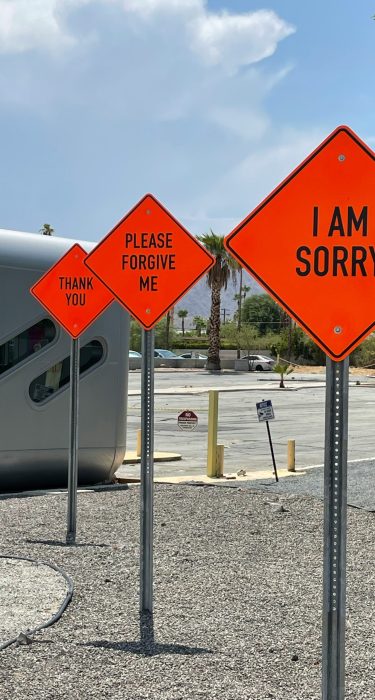
Why do Apology Languages Matter?
It’s About Regulating the Nervous System
When we are in a conflict, our bodies often enter a state of “hyper-arousal”—that racing heart, shallow breath, and “fight or flight” energy. A failed apology keeps us in that state of high alert. However, an apology spoken in your specific language acts as a biological “off-switch” for that stress. It signals to your nervous system that the threat has passed and it is safe to socially re-engage. At Haven Collective, we focus on this somatic (body-based) shift because you can’t logically “reason” your way into feeling safe; you have to feel it in your bones.
Breaking the “Cycle of the Unfinished”
In our couples counselling sessions, we often see couples who feel like they are “living in the past.” This usually happens because they have a backlog of unfinished repairs. When an apology misses the mark, the brain stores that event as an “open file” of unresolved hurt. Over time, these open files can lead to a protective distancing or “roommate phase” many couples fear. Learning these languages allows you to finally close those files, freeing up emotional energy to actually enjoy your life together.
Building “Relational Capital”
Think of every successful repair as a deposit into your relationship’s “Emotional Bank Account” (another Gottman concept). When you take the time to learn your partner’s “Repair Recipe,” you are telling them: “I see you, I value your unique perspective, and I am willing to do the work to meet you where you are.” This builds a reservoir of trust and goodwill that helps you weather the inevitable stresses of life.
FAQ’s About Apology Languages and Relationships
- What if my partner and I have completely different apology languages? This is actually the norm! Most couples don’t start out speaking the same dialect of repair. The goal of couples counselling isn’t to force one person to change how they naturally feel, but to become “bilingual.” In couples counselling sessions, we help you translate your intent into a language your partner can actually receive. It’s a collaborative and empowering process of learning to say, “I know you need to hear that I was wrong before you can hear that I’m sorry.”
-
How do I know what my apology language is? You can take the Apology Languages Quiz, or think about a time an apology “fell flat” and left you feeling untrusting or cold. What was the “missing piece”?
- Expressing Regret: Did you feel like they didn’t really get how much they hurt you? You needed to feel their empathy.
- Accepting Responsibility: Did you feel like they were making excuses or “but-ing” their way out of it? You needed them to own the mistake.
- Genuinely Repenting: Did you feel like they were just going to do it again tomorrow? You needed a concrete plan for change.
- Making Restitution: Did you feel like you were still the one stuck cleaning up the emotional or physical mess? You needed them to “make it right.”
- Requesting Forgiveness: Did you feel like they were demanding you get over it on their timeline? You needed them to ask for your grace and give you the space to say “yes” when you were ready.
3. What if I don’t feel ready to apologize yet? Sometimes, our nervous system is too “activated” (in fight-or-flight) to give a sincere apology. If you force it, it will feel clinical and hollow. We often teach couples in counselling the “20-minute rule”: take a break to self-soothe—go for a walk by the water, breathe, or listen to music—until your heart rate drops. A repair attempt is only successful if you are regulated enough to mean it.
4. Does Haven Wellness Collective offer online counselling for couples? Yes. We provide online counselling across BC. We’ve found that many couples actually feel more comfortable doing this work from their own “haven”—their living room couch. It allows you to practice these repair attempts in the exact environment where the conflicts usually happen. We have also found that online couples counselling can be convenient for couples in long-distance relationships.
5. What if our fights feel “too big” for just an apology? Sometimes a fight about the dishes isn’t actually about the dishes; it’s a “poke” to an old wound or a past trauma. If you find that “I’m sorry” never feels like enough, there might be deeper roots at play. Our team includes EMDR therapists in Vancouver who specialize in helping individuals and couples process the “stuck” memories that make modern-day fights feel so explosive. We would love to support you in getting to the root cause of what’s happening individually and in your relationship.
Find a Therapist Who Is a Right Fit for You
You don’t have to stay stuck in the cycle of “mismatched repairs.” Whether you’re visiting our cozy space in Kitsilano or meeting us online, we believe you are the expert on your life—we are just here to walk alongside you with gentle curiosity and the right tools to find your way back to each other. Reach out to our team for couples counselling or in person counselling in Vancouver today.