
Easing Back-to-School Anxiety: 5 Play Therapy Strategies for Elementary Children
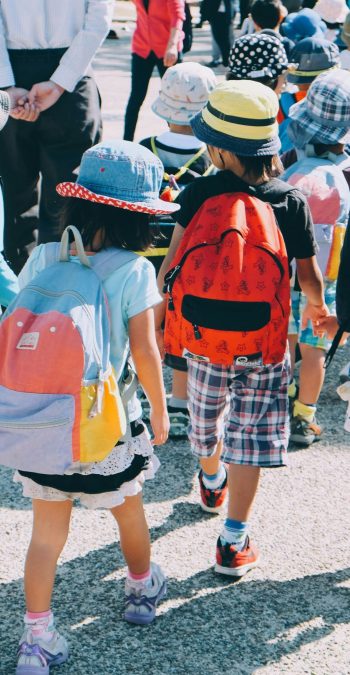
The night before the first day of school is a mix of fresh school supplies, oversized backpacks, and big emotions. As parents, we want our children to feel pure excitement, but many elementary schoolers carry hidden worries: Who will I sit with at lunch? Will my teacher be nice? What if I miss home?
In child therapy, play is a child’s language, and toys are their words. Children rarely say, “I feel overwhelmed by this transition.” Instead, child anxiety often shows up as stomachaches, bedtime stalling, or sudden meltdowns.
While professional therapy offers deep, individualized support for childhood anxiety, bringing play therapy techniques into your home routine is a fantastic way to support your child’s emotional wellbeing daily. Here are five practical, play-based strategies you can use at home to ease back-to-school jitters and foster emotional resilience.
1. Map Out “Tummy Butterflies” (Somatic Awareness)
Anxiety manifests physically long before children can process it cognitively.
- The Activity: Trace your child’s body on a large piece of paper (or use a free printable body outline)
- How to Play: Assign colours to feelings (e.g., purple for worried, blue for excited, red for mad). Have your child colour where those feelings live in their body—like fluttering in their stomach or tightness in their shoulders.
- Why Child Therapists Recommend It:This gently teaches your child to listen to their body. By naming and mapping out their physical sensations, they learn to catch their stress early, making it much easier to use a calming strategy before a full-blown meltdown happens.
2. Build a “Hope & Worry” World (Symbolic Play)
Expressing complex fears directly can feel intimidating for young minds. Symbolic play offers a safe boundary.
- The Activity: Fill a shallow container with kinetic sand, rice, or dry beans, and gather small toys or Lego figures.
- How to Play: Ask your child to build two scenes: a “Great School Day” and a “Worried School Day.”
- Why Child Therapists Recommend It: Talking directly about fears can feel way too threatening for an elementary schooler. Playing with toys creates a safe psychological distance. It allows your child to show you exactly what they are afraid of without having to find the perfect words.
3. Play “Feelings Uno” (Normalizing Mixed Emotions)
It is completely normal for a child to feel two opposite things at once—like being thrilled to see their best friend, but terrified of third-grade math. However, holding conflicting emotions can feel highly confusing to a young mind.
- The Activity: Use a standard Uno deck or an ad-free online version like Four Colors on Toy Theatre.
- How to Play: Assign prompts to card colours:
- Red: Name something that makes you feel strong.
- Blue: Something you’ll miss about summer.
- Green: A fun memory from last year.
- Yellow: Something you’re excited to learn.
- Why Child Therapists Recommend It: Gamifying the conversation lowers their guard. It normalizes dialectical thinking and shows children that it is okay to feel both brave and nervous at the exact same time.
4. Co-Author a “What If?” Storybook (Interactive Bibliotherapy)
Children love stories because they can see themselves in the characters. Creating a personalized story together is a wonderful way to problem-solve school anxieties.
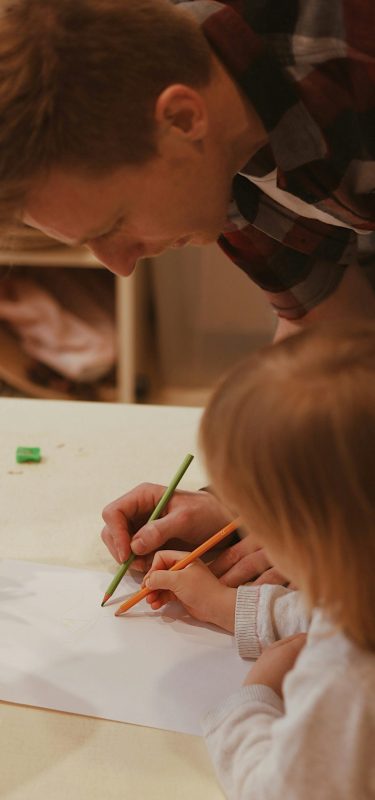
- The Playful Activity: Fold a few pieces of paper together to make a blank booklet, or open up a blank Google Slide document to create a digital picture book.
- How to Play: Write a story together about a character (maybe a favourite animal) who is starting the exact same grade your child is entering. Write out their “What Ifs” on the pages: “What if Barnaby the Bear gets lost looking for the bathroom?” or “What if Barnaby drops his lunch tray?” Then, have your child draw the pictures and help you write the solution to Barnaby’s problem.
- Why A Child Therapist Recommends this: This acts as a dress rehearsal for your child’s brain. By helping the character solve a problem, your child is secretly building a mental toolkit for themselves, transforming the scary unknown into a manageable plan.

5. Craft a “Connectedness” Token (Addressing Separation Anxiety)
Saying goodbye at the school gate or the bus stop can be the hardest part of the entire day, especially for younger elementary schoolers who have spent all summer by your side. They may be feeling some separation anxiety, which we get – can be hard for parents too!!
- The Playful Activity: Find two small, smooth pocket stones, or cut out two matching hearts from a sturdy piece of paper.
- How to Play: Spend an evening decorating them together with paint, markers, or stickers. Rub a little bit of your favorite lotion onto both tokens so they carry a familiar scent. Put one token in your child’s school pocket or backpack, and keep the matching one in your own pocket or purse.
- Why a Child Therapist Recommends it: In psychology, we call this a transitional object. It serves as a physical, tangible reminder that even though you are physically apart during the school day, your love and connection are still firmly holding them close.
A Gentle Reminder for Parents for the Night Before
As you navigate this transition, remember to extend a little grace to yourself, too. Children are incredibly intuitive emotional barometers—they pick up on our stress and our calm. Taking a few deep breaths and approaching the school year with a spirit of play won’t just ease your child’s jitters; it will ground your entire household in warmth, love, and resilience.
Supporting Your Child’s Mental Health In Therapy
Home strategies are a wonderful foundation, but if back-to-school anxiety feels overwhelming, persistent, or hard to manage on your own, professional support can make all the difference.
At Haven Wellness Collective, our experienced child therapists provide compassionate counselling and tailored play therapy and art therapy to help children and parents navigate life transitions with confidence. Here’s to a wonderful, playful new school year!