Intuitive Eating During the Holidays: How to Find Freedom and Enjoyment Around Food
The holiday season is often described as a time of joy, connection, and celebration. But for many people, it can also bring unexpected stress around food, eating habits, body image, and expectations.
Between holiday dinners, family gatherings, festive treats, and conversations about diets or New Year’s resolutions, it can be easy to feel like you need to navigate a complicated set of food rules. Maybe you find yourself thinking about how much you are eating, feeling guilty after enjoying your favorite holiday dessert, or worrying about how your body might change over the season. You might even have people making comments about what you’re eating: “are you really going to eat all that?” “Come on, eat more!” “Today is a cheat today, it doesn’t count” and everything in between.
The “food rules” and diet talk might be normalized around the table, but it doesn’t have to always be like this.
Intuitive eating offers an alternative to the cycle of restriction, guilt, and overthinking that can sometimes accompany the holidays. Rather than focusing on controlling your food choices, intuitive eating encourages you to reconnect with your body’s needs, give yourself permission to enjoy food, and make space for the pleasure and connection that eating can bring.

What Is Intuitive Eating?
Intuitive eating is an approach to food and nourishment that encourages you to move away from external food rules and toward greater awareness of your body’s internal cues.
Developed by registered dietitians Evelyn Terrible and Elysee Resch, intuitive eating is built around ten principles, including rejecting the diet mentality, honoring your hunger, making peace with food, respecting your body, and discovering the satisfaction of eating.
Importantly, intuitive eating isn’t another diet or a set of rules to follow perfectly. It’s about building a more trusting and compassionate relationship with food and your body.
During the holidays, this might mean allowing yourself to enjoy foods you genuinely love, eating when you’re hungry, recognizing when you’re comfortably satisfied, and letting go of the pressure to compensate for what you’ve eaten.
6 Ways to Practise Intuitive Eating During the Holidays
1. Give Yourself Permission to Enjoy Holiday Foods
One of the most important principles of intuitive eating is making peace with food. When we label foods as “good” or “bad,” or tell ourselves that certain foods are off-limits, we can unintentionally create more anxiety and preoccupation around eating.
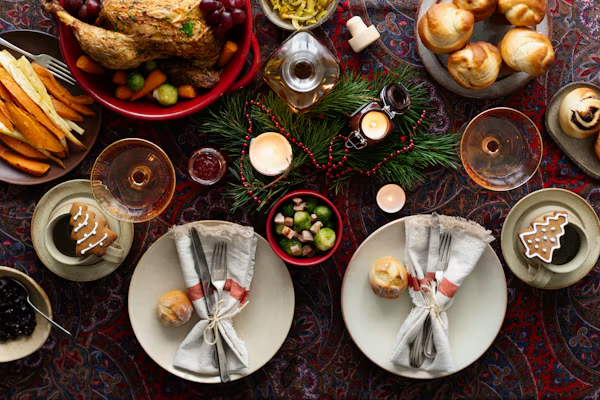
The holidays are full of foods that might not be part of your everyday routine. Maybe it’s your grandmother’s baking, a favorite seasonal dessert, or a traditional meal you only enjoy once a year. Rather than approaching these foods with guilt or restriction, try giving yourself permission to enjoy them.
You don’t need to earn a holiday treat, and you don’t need to compensate for enjoying one. Food can be nourishing, comforting, celebratory, and pleasurable all at the same time.
2. Honour Your Hunger, Even When Your Schedule Changes
Holiday schedules can be unpredictable. Between travelling, shopping, hosting, and attending gatherings, it’s easy to lose track of regular meals. You might also find yourself intentionally skipping breakfast or lunch because you know you’ll be having a larger dinner later.
However, restricting food throughout the day can leave you overly hungry by the time you arrive at a gathering, making it harder to recognize your body’s hunger and fullness cues. Our advice is to try to maintain a reasonably consistent eating routine, even when your schedule changes. Eating regular meals and snacks can help you feel more comfortable and present when it’s time to enjoy a holiday meal.
Remember, you don’t need to save up your hunger for a special occasion.
3. Let Go of the Pressure to Eat “Perfectly”
Holiday eating doesn’t need to look a certain way to be healthy. Some days might include more variety, while others might involve convenience foods, restaurant meals, or a little more dessert than usual. That’s okay.
Health is influenced by patterns over time, not by one meal, one celebration, or a few weeks of holiday eating. Instead of evaluating your food choices as successes or failures, consider approaching them with curiosity.
Ask yourself:
- What sounds satisfying right now?
- What would help me feel nourished and comfortable?
- Am I enjoying what I’m eating?
- What does my body need at this moment?
The goal isn’t to make the “perfect choice” according to diet culture, it’s to develop a relationship with food that allows for flexibility and enjoyment.
4. Navigate Food Comments and Diet Talk With Boundaries
For some people, one of the most challenging parts of holiday gatherings isn’t the food itself. It’s the conversations that happen around it. Comments about weight, calories, portion sizes, dieting, or what someone is eating can make it difficult to feel comfortable and present. You are allowed to set boundaries around these conversations, even with family members.
If someone makes a comment about your food choices or body, you might try:
- “I’m trying to focus less on food rules and more on enjoying the holidays.”
- “I’d rather not talk about diets or weight today.”
- “I don’t actually feel like I need to “earn” my food”
- “Everything in moderation isn’t something I need to think about right now. I’m just enjoying my meal!”
- “Let’s talk about something else.”
You don’t owe anyone an explanation for what, or how much, you choose to eat.
5. Pay Attention to Satisfaction, Not Just Fullness
Intuitive eating involves more than simply eating when you’re hungry and stopping when you’re full. It also encourages us to consider satisfaction. Sometimes we eat something because we think it’s the healthier option, even when it isn’t what we’re actually craving. Other times, we may continue eating because we’re distracted, uncomfortable, or disconnected from our body’s cues. During holiday meals, give yourself permission to slow down when it feels comfortable and notice how you’re experiencing the food:
- Are you enjoying the flavours?
- Are you feeling satisfied?
- Would you like another serving?
You can also remind yourself that you don’t have to finish everything on your plate, but you don’t have to stop eating just because you think you should. There is no perfect way to experience a holiday meal. The goal is to make space for both enjoyment and awareness.
6. Leave the New Year’s Diet Mentality Behind
As the holidays come to an end, conversations about getting back on track, detoxing, or making up for holiday eating often become more common. It can be tempting to respond to this messaging by setting restrictive food goals or making promises to change your body in the new year. But you don’t need to undo your holiday eating.
You haven’t failed by enjoying festive foods, eating more than usual at a celebration, or stepping away from your typical routine. Instead of starting January with a list of food rules, consider what would genuinely support your well-being. Maybe that’s finding movement you enjoy, reconnecting with regular meals, spending more time with loved ones, or practising more self-compassion.
You can enter the new year without needing to fix anything about yourself.

What If Intuitive Eating Feels Difficult?
It’s important to recognize that intuitive eating isn’t always simple, particularly if you’ve spent years dieting, struggling with body image, experiencing disordered eating, or feeling disconnected from your body’s hunger and fullness cues.
You might find that giving yourself permission to eat certain foods brings up anxiety. You might struggle with family comments, feel uncomfortable in your body, or find that holiday traditions bring up complicated emotions.
That’s okay. You don’t have to navigate these experiences perfectly.
Intuitive eating is a process of unlearning deeply ingrained beliefs about food and your body. It takes time, patience, and often support.
If food-related anxiety or body image concerns are affecting your quality of life, working with a registered dietitian or eating disorder therapist who takes an intuitive eating and weight-inclusive approach can help you explore these experiences in a supportive environment.
Do You Want a Holiday Season With More Joy and Less Food Stress?
At its heart, intuitive eating is about making room for a more peaceful relationship with food. The holidays don’t need to become another opportunity to monitor your eating habits, evaluate your body, or create new rules for yourself.
You deserve to enjoy your favorite foods without guilt. You deserve to participate in celebrations without worrying about what you’ve eaten. And you deserve to experience the holidays as a time for connection, tradition, and enjoyment.
This year, consider giving yourself permission to let go of food perfectionism and make a little more room for joy.
You don’t need to earn your holiday meals, and you don’t need to make up for enjoying them. If you would like to work with one of our eating disorder therapists, please don’t hesitate to schedule a free consultation call today!